5,500 PSI: The Pressure Reading That Defines the New Roadster’s Cockpit
Tesla’s latest interface preview highlights a dedicated status bar for the high-pressure thruster system, signaling a cockpit design centered on high-performance telemetry rather than standard navigation.
By Mei Ling ·
Tesla has provided the most comprehensive look yet at the interior technology of its upcoming next-generation Roadster, revealing a cockpit interface that prioritizes vehicle performance over traditional driving utilities. The reveal came via a 34-second video posted to X on Friday afternoon, accompanied by a caption stating the design was inspired by fighter jet cockpits and built around the pilot.
The primary focus of the software demonstration is the Track Mode, which dominates the majority of the screen real estate. This mode displays live circuit mapping, session lap times, and detailed mechanical data including brake and motor temperatures. Drivers can also monitor individual tire pressure and temperature readouts. The setup pages allow for granular control, offering choices between Auto, Low Drag, High Downforce, or Custom aero modes, alongside adjustments for aero and brake balance. Stability and traction controls can be toggled off, catering to high-speed track usage.
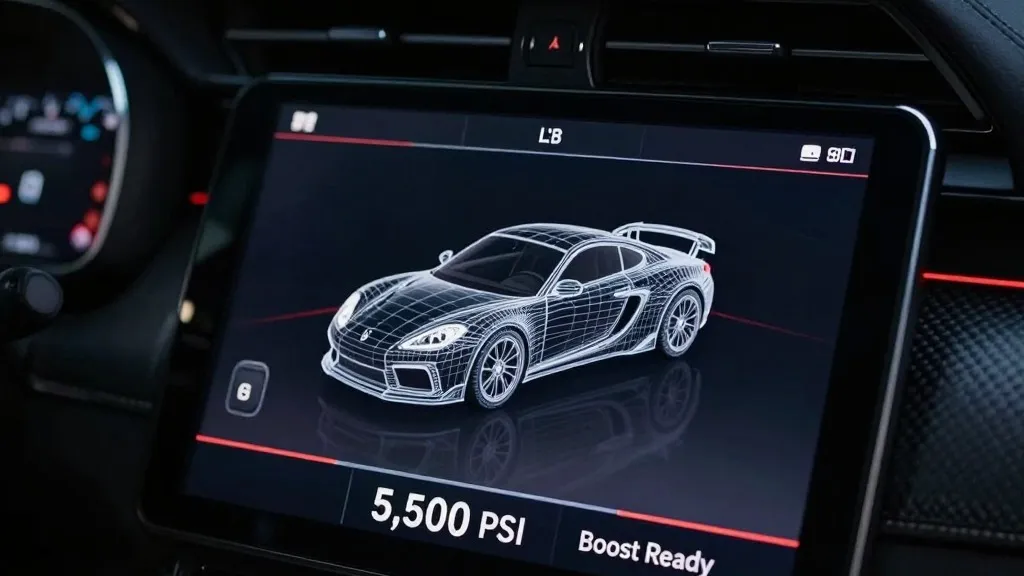
A key element of this interface is a status bar at the bottom of the screen displaying “Thruster · 5,500 PSI” next to a “Boost Ready” indicator. This software feature directly correlates with the hardware Tesla showcased near Waco, Texas, in mid-October. The Thrust and Rocket variants of the vehicle utilize cold gas thrusters powered by carbon overwrapped pressure vessels. Tesla claims these configurations achieve 0 to 60 mph acceleration times of under 0.9 seconds and under 0.59 seconds, respectively. In contrast, the base Performance model relies on a fan and ground sealing system for grip, with the on-screen aero settings corresponding to its active wing and suction capabilities.
The user interface represents a significant shift from Tesla’s existing lineup. Unlike the Model 3 or other current vehicles, which feature map-centric home screens, the Roadster places a 3D wireframe of the car at the center of the display. Interacting with this model reveals controls for the rear wing, charging limits, and a compact music player. The bottom navigation bar includes tabs for Home, Vehicle, Listen, Climate, and Navigate. Tesla’s official page also lists two smaller forward-facing displays positioned alongside the main touchscreen, though it remains unclear if any of this telemetry will be ported to other models like the Model 3 Performance.
Several factors suggest the final interface may evolve before customers take delivery. Tesla has not confirmed the specific production timeline beyond Elon Musk’s statement that manufacturing will commence in 2028. Additionally, the top-tier Rocket version is not currently approved for public road use. Reservations are open with a $50,000 deposit, while the Thrust version is designated as a limited release and the Rocket is invite-only.
For California residents, the first public opportunity to view the vehicle in person arrives this weekend. The Roadster will be displayed in the lobby of the Petersen Automotive Museum in Los Angeles from October 24 to 27, according to Sawyer Merritt. This exhibition marks the first time the general public can inspect the car’s exterior and interior features up close.
Source: Teslarati